Mistake 3: Not Sharing The Story
You've done the work from the last two lessons. (Mistake #1
You've picked your thing. You've cleaned up your profile. You know who you help and how you help them.
And then... nothing happens.
You sit there waiting for clients to show up. You check your inbox. Refresh the page. Maybe someone will message you today.
Nobody does.
And you start thinking — "Maybe I'm not good enough yet.
Maybe I need more experience. Maybe I should just go back to applying on Fiverr."
But that's not the problem.
The problem is simpler than you think.
Nobody knows you exist.
Having an identity means nothing if you keep it to yourself.
This is where most freelancers completely stall out.
They set up their profile. They write their offer statement. They even clean up their friends list.
Then they go silent.
They don't post. They don't share. They don't say anything.
Why?
Because they're afraid.
Afraid of looking stupid. Afraid of not having anything valuable to say. Afraid that people will judge them for not being "expert enough."
So they wait. They tell themselves — "I'll start posting once I have some real client work to show." Or "I'll share my story once I've actually made it."
And they wait.
And wait.
Meanwhile, some freelancer with half their skill is getting clients left and right — because that person is showing up every single day and talking about what they do.
That's the gap.
It's not talent. It's not luck. It's not connections.
It's who's willing to be visible.
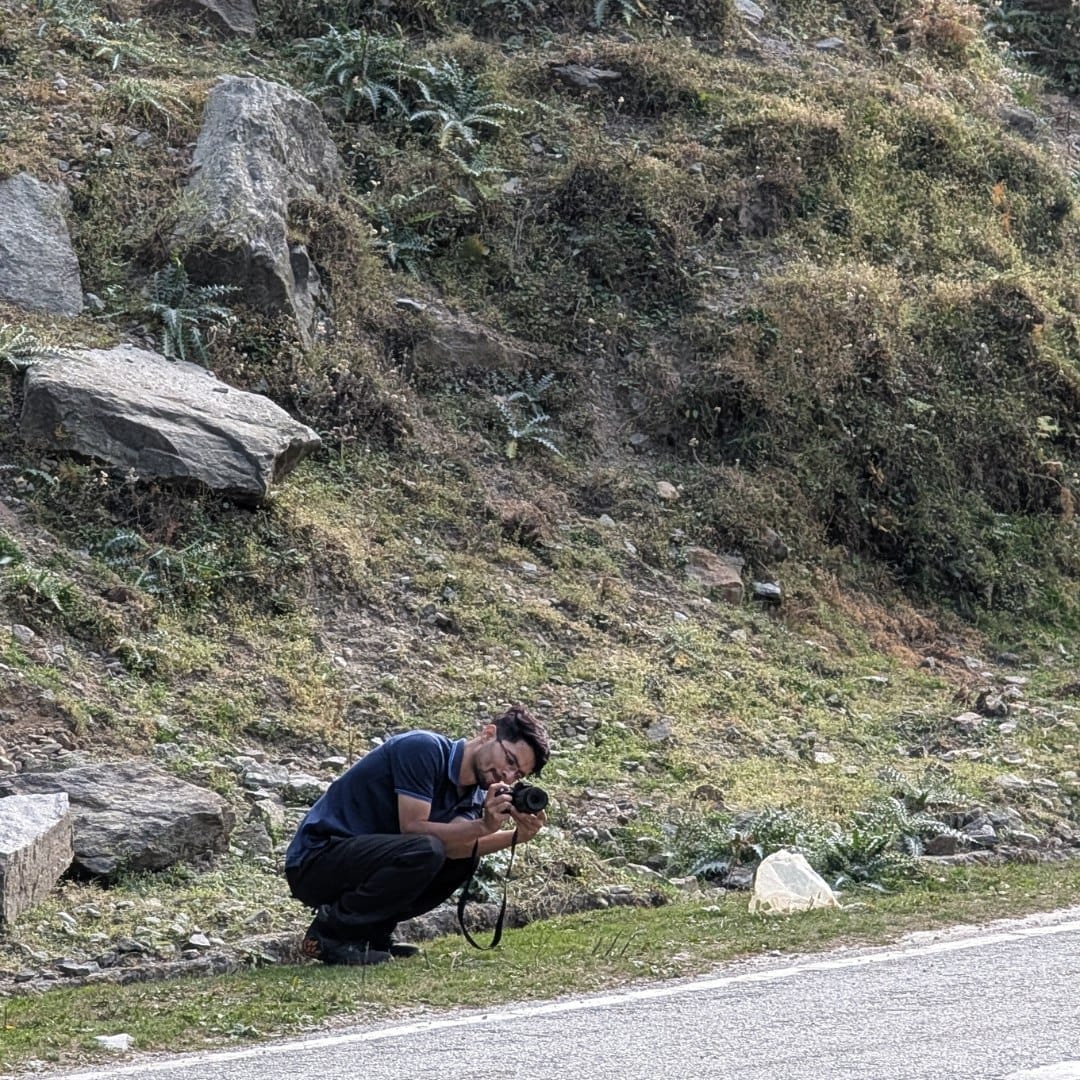
I almost made this mistake permanently.
When I started in 2021, my plan was simple — learn, gain experience, and then showcase my work once I had something impressive.
I used to think that one day I'd post a perfect piece of work and people would go crazy about it.
I was wrong.
For a while, I tried acting like a pro to get projects. It didn't work.
People can sense when you're faking it — it shows in your communication, the way you present yourself, your body language. Everything.
So I stopped pretending and started telling the truth.
I wrote about that day sitting by the lake, feeling completely lost.
I shared what I learned from working with a branding agency — where I realized that despite acting like an expert, I actually knew very little. They had 25 years in business and were incredibly humble. There I was, with a few months of experience, acting like a so-called expert.
I talked about my burnout phase. How I almost completely stopped working. How I recommended my clients to other, far more experienced designers.
And not a single client left. They all waited for me to come back.
One morning, I received a message from a client who said she had learned more from my stories and experiences than from a mentor who had built multiple million-dollar businesses.
That's when I understood something most freelancers never figure out.
People don't just buy services. They buy from people they trust and relate to.
And trust comes from one thing — sharing the real story.
What to actually share.
I'm not talking about motivational quotes or bragging about how amazing you are.
Most freelancers do one of two things. They either post nothing about their work. Or they constantly talk about how great they are.
Neither works.
Here's what does.
Share the behind-the-scenes. Show how you work, not just the final result. Record your screen. Take a photo of your messy desk. Walk people through your process. When someone sees how much effort and thought goes into what you do — hiring you becomes an easy decision.
Share what you're learning. You don't need to be an expert. You just need to be honest about where you are and what you're figuring out. People connect with the journey, not the destination.
Share the struggles. The project that went wrong. The client conversation that was awkward. The month where nothing worked. This is what makes you human. And human is what people trust.
Share small wins. Not to brag — but to show that your methods work. "Just helped a client increase their email open rates by 40%." That one line does more selling than any pitch ever will.
The goal isn't to become famous. It's not about getting thousands of likes.
It's about making sure that when the right person scrolls past your name, they stop — because they've been following your story, and they already trust you.
How to promote without sounding desperate.
This part matters.
I used to see freelancers posting things like "I need clients!
Message me if you need design work!" and it made me cringe.
That's not attracting clients. That's pushing them away.
What works is making soft offers based on problems you can solve.
Instead of "Hire me for your website" — try something like:
"Working on a guide to help you reduce your ad costs. Interested?"
"If you're not getting enough conversions from your website, I'll do a free audit."
"Just helped a client cut their cost per lead in half. Here's what we changed."
See the difference?
It's not about what you need. It's about what they might need.
Do this once or twice a week. Not every day. Not never. Just regularly enough that people know you're available for the right projects.
Sometimes nobody responds. That's fine.
Sometimes two or three people ask questions. And because you've been helpful instead of desperate — those responses come from people who actually have problems you can solve.
The key is "I'm here to help if you need this" — not "Please hire me, I'm running out of money."
What actually happens when you do this.
I'm not going to lie and say everything changes overnight.
It doesn't.
For the first few weeks, you might feel like you're talking to yourself. That's normal.
Around month two, you'll notice more people responding to your posts. Better conversations when you reach out. People coming to you instead of you chasing them.
But here's the real change — your confidence.
When you're clear about what you do, who you serve, and you're showing up consistently — conversations become easier. Pricing becomes easier. Saying no to wrong clients becomes easier.
The difference isn't just in the money. It's in how you feel about your work.
Most freelancers give up right before things start working.
Pick a path. Stick with it for at least 90 days. Don't change direction every time something feels slow.
The clients you want are out there. They're looking for someone exactly like what you can become.
But they can't find you if you stay invisible.
Now here's the honest truth.
Most people will read this guide, nod along, maybe even feel excited about the possibilities.
Then they'll close it and go back to doing exactly what they were doing before.
I know because I've seen it happen hundreds of times.
The information in these three lessons isn't complicated. Picking your thing. Building your identity. Sharing your story.
None of this is rocket science.
But doing it — consistently, patiently, without giving up after two weeks — that's where most people fall off.
Not because they can't. Because they don't have someone holding them to it.
If you want help implementing this.
I've laid out the 3 biggest mistakes. You know what they are now. You know how to fix them.
If you can take these lessons and run with them on your own — do it. Seriously. You don't need anyone's permission.
But if you're stuck — if you've been going back and forth, trying different things, not getting traction — and you want someone to look at your specific situation and tell you exactly what to do next...
I do 1-on-1 consultations for people who are serious about building their freelancing business.
Not a motivational pep talk. Not generic advice you could find on YouTube.
A focused conversation about where you are right now, what's not working, and the specific steps you need to take in the next 30 to 90 days.
Book Your 60-Minute Consultation Here →
This is a paid call.
Not because I'm trying to make money off you — but because it filters out people who are just browsing from people who are actually ready to do something.
Every person who's booked this call has told me the same thing afterward: "I wish I had done this months ago instead of going in circles."
If that sounds like you, I'll talk to you soon.
If not — take these three lessons and go build something.
Either way, stop waiting for the perfect moment.
It doesn't exist. But right now is pretty good.